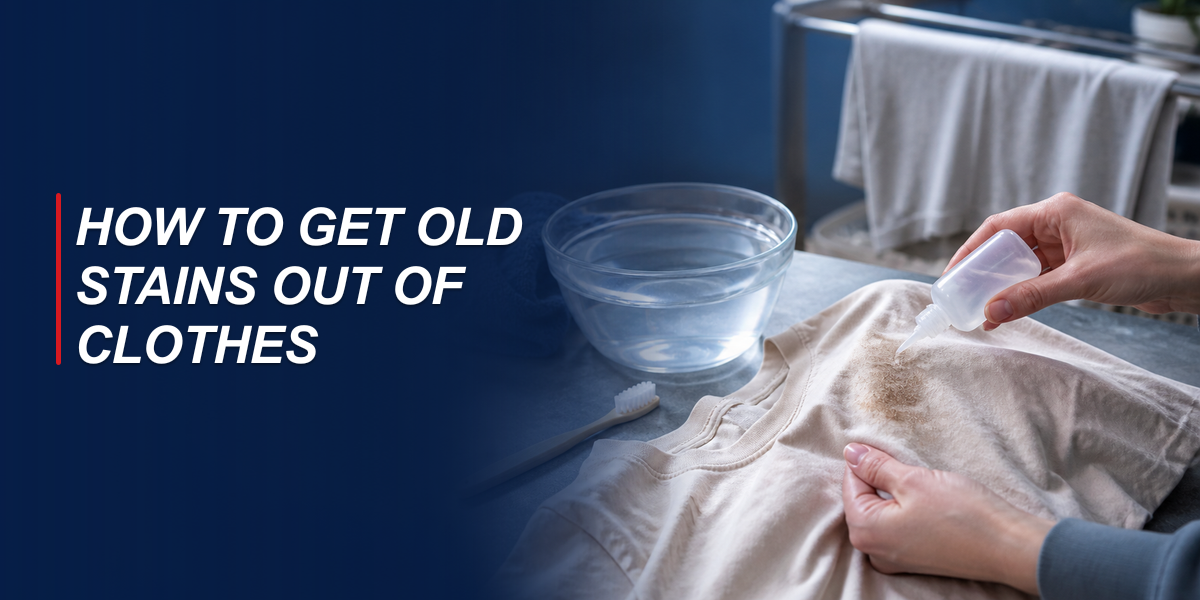
If you're trying to figure out how to get old stains out of clothes, you already know the frustration: a spot you missed weeks ago is now baked in, and a regular wash cycle isn't touching it. Once a stain has been through the dryer or simply sat for days, the fibers lock the residue in and heat can set it permanently. The good news is that "set" doesn't always mean "permanent" — it just means you need a different approach than you'd use on a fresh spill. For the complete playbook across every stain type, start with our guide to how to remove stubborn stains.
Why Dried-In Stains Are Harder to Remove
Fresh stains sit on top of the fabric. Old, dried-in stains work their way into the weave and, if the garment has been through a hot dryer, the heat can bond the stain molecules to the fibers. That's why removing stains from clothes that have been dried is a different challenge than treating something you just spilled at dinner. Heat is the enemy of stain removal — it's great for germs, terrible for stains. The core rule for any old-stain rescue mission: never put a stained item in the dryer until you've confirmed the stain is gone. Heat will lock in whatever is left.
The General Step-by-Step Method
Most old stains respond to the same basic process, whether it's on a t-shirt, tablecloth, or pair of jeans. Here's how to remove old stains from clothes using a method that works for the majority of everyday messes.
Step 1: Identify the Stain (If You Can)
Knowing whether you're dealing with grease, protein, or tannin changes which pre-treatment works best. If you can't remember what caused it, treat it as a combination stain and start with the general method below before moving to a type-specific fix.
Step 2: Pre-Treat and Soak
Apply a stain remover, a paste of powdered detergent and water, or a dab of dish soap (great for grease) directly to the stain. Work it gently into the fibers with your fingers or a soft brush. Then soak the garment in cool or lukewarm water — never hot — for at least 30 minutes, and up to several hours or overnight for stubborn spots. Soaking rehydrates the dried residue so it can actually lift away from the fabric.
Step 3: Agitate
After soaking, gently rub the fabric against itself or use an old toothbrush to work on the stained area. This mechanical action helps break up the residue that soaking has loosened. Rinse and check your progress before moving on.
Step 4: Wash
Wash the item in the warmest water the fabric care label allows — unless you're treating a protein or tannin stain (blood, sweat, dairy, coffee, wine), which should stay in cool water so the heat doesn't set what's left of the stain. Use a full dose of detergent and, if the stain is still visible, an oxygen-based booster or additional stain remover added to the wash. Don't mix bleach-based products with other cleaners, and always check compatibility with colored fabrics first.
Step 5: Air-Dry and Check Before Drying
This is the step people skip — and it's the one that matters most. Let the item air-dry, then hold it up to the light and inspect the stained area closely while it's still damp (stains are easier to spot on wet fabric). If any trace remains, repeat the soak-and-wash cycle. Only run it through the dryer once you're confident the stain is completely gone.
Removing Old Stains by Type
Grease and Oil Stains
Old grease stains often look dry and dark rather than shiny. Work a small amount of dish soap or a dedicated degreaser into the spot, let it sit for 15–20 minutes, then wash in the hottest water the fabric allows (grease actually responds well to heat, unlike protein stains). Check before drying, since grease that isn't fully lifted can reappear as a faint shadow once heat-set.
Protein Stains (Blood, Sweat, Food)
Protein-based stains — blood, egg, dairy, sweat — need cool water, never hot, or you'll cook the stain into the fabric. Soak in cold water with a small amount of enzyme-based detergent or a meat-tenderizer paste, which helps break down the protein bonds. Give it extra soak time for anything that's been sitting for weeks.
Tannin Stains (Coffee, Wine, Tea)
Tannin stains are notorious for looking "gone" after a rinse, only to reappear once the fabric dries. Flush the area with cool water first, then apply a mix of white vinegar and water or a dedicated tannin stain remover before laundering as usual. For old coffee or red wine stains, a second treatment is often needed — don't be discouraged if the first round only lightens it.
Sweat and Yellowing on White Clothes
If you're wondering how to get old stains out of white clothes, yellowing underarm stains and general dinginess are usually a mix of sweat, deodorant residue, and body oils that have oxidized over time. A paste of baking soda and hydrogen peroxide, left on for 30–60 minutes before washing, is one of the most effective ways to attack this combination. For how to remove old stains from white clothes on sturdier fabrics like cotton, an oxygen bleach soak (safe for colors and whites alike) can brighten fabric without the fiber damage that chlorine bleach causes over time.
When to Give Up (or Call in a Pro)
Not every old stain is worth the fight. If you've tried the soak-treat-wash cycle two or three times and the stain hasn't budged at all, it may have permanently bonded with the fabric — especially if it went through a hot dryer before you noticed it. At that point, a specialty cleaner or a laundromat with commercial-grade equipment and stronger detergent options can sometimes succeed where home treatments can't, particularly on larger loads, bedding, or items too bulky for a home machine.
FAQ: How to Get Old Stains Out of Clothes
How do you remove old stains from clothes without damaging the fabric? Always test any stain remover on an inside seam first, use the coolest water appropriate for the stain type, and avoid combining chemical treatments. Gentle, repeated treatments are safer than one aggressive attempt.
Can you still get a stain out after it's been through the dryer? Sometimes. Removing stains from clothes that have been dried is harder because heat sets the stain, but a longer soak and repeated treatment cycles can still work, especially on grease and tannin stains.
Is it safe to use bleach on old white stains? Oxygen bleach is generally safer for fabric fibers than chlorine bleach and works well on old white stains, but always check the care label first.
Still Fighting a Losing Battle?
If you've soaked, scrubbed, and re-washed and that stain is still staring back at you, it might be time to bring in bigger equipment. Great American Laundromat's wash & fold service handles tough loads with commercial-grade machines and stronger wash cycles, or you can use our self-service machines to run your own extended soak-and-wash