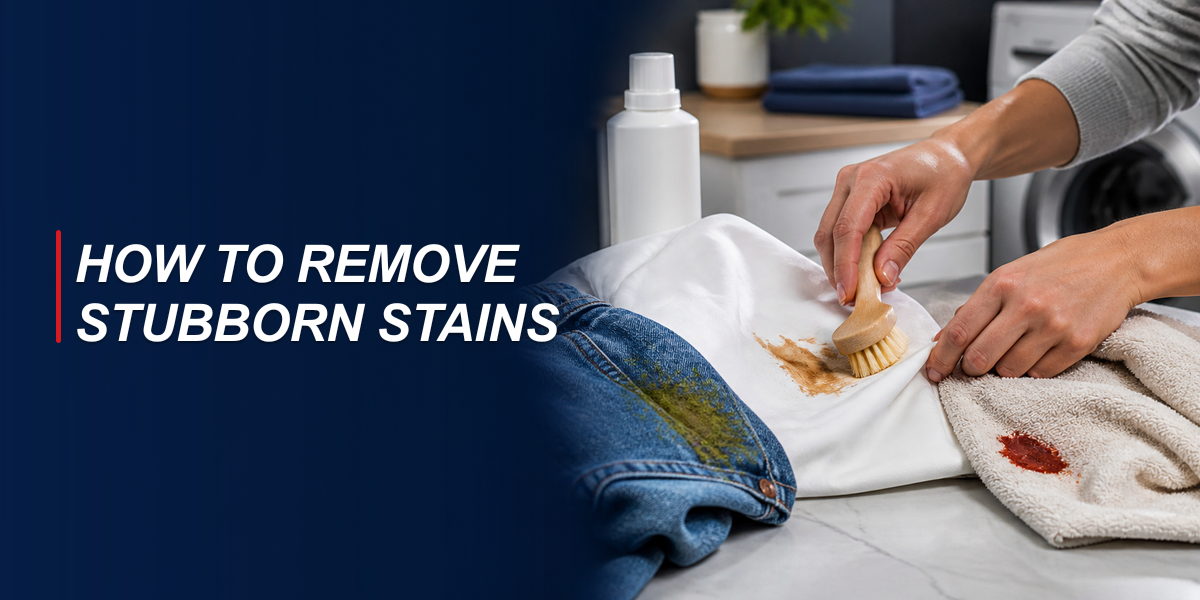
If you're searching for how to remove stubborn stains, you've probably already tried the obvious fix — toss it in the wash and hope — and watched the stain shrug it off like it wasn't even there. Some stains just laugh at a normal wash cycle. Grease, blood, wine, grass, red clay, ink — they bond to fabric fibers in ways a standard detergent-and-water cycle was never designed to handle, especially once they've had time to dry and set.
The good news is that almost any stain can be beaten with the right approach, applied quickly and in the right order. This guide covers the universal rules of stain removal, a scannable stain-by-stain reference chart, a general method you can use on anything you can't identify, the mistakes that make stains permanent, and answers to the questions we hear most often at the counter. Think of it as the hub — the master guide — with links out to our deep-dive posts on specific stain types if you want more detail.
The Universal Rules: How to Remove Stubborn Stains From Any Fabric
Before you reach for a specific product or technique, these six rules apply to almost every stain you'll ever fight. Get these right and you've already won half the battle.
1. Act fast
The longer a stain sits, the more time it has to bond with fabric fibers and oxidize into something permanent. A fresh spill treated within minutes is dramatically easier to remove than one that's had all day to dry in.
2. Blot, don't rub
Rubbing a stain pushes it deeper into the weave and can spread it to a wider area. Always blot from the outside of the stain toward the center with a clean white cloth or paper towel.
3. Cold water first
Hot water can set certain stains — especially protein-based ones like blood, egg, and dairy — by cooking the proteins right into the fabric. Rinse or pre-treat with cold water unless you're specifically dealing with a greasy, oil-based stain, which responds better to warm water and dish soap.
4. Identify the stain type before you treat it
Not every stain responds to the same treatment. Protein stains, tannin stains, and oil-based stains all need different approaches, and using the wrong one can make things worse. When in doubt, start gentle (cold water and mild detergent) and work up to stronger treatments.
5. Air-dry and re-check before machine drying
This is the step people skip, and it's the one that turns a treatable stain into a permanent one. Heat sets stains. Never put a stained garment in the dryer until you've confirmed, in good light, that the stain is completely gone. If any shadow remains, treat it again and air-dry once more — the dryer should be the very last step, not part of the removal process.
6. Never mix bleach and ammonia
Both show up in stain-removal advice, but combining them creates toxic fumes. Choose one approach, rinse thoroughly, and ventilate the area if you're using either product.
Stain-by-Stain Quick Reference: How to Get Stains Out of Clothes
Here's a scannable breakdown of the toughest stains we see and how to approach each one. For a few of these, we've got a full deep-dive guide linked below if you want more detail.
| Stain Type | Quick Fix |
|---|---|
| Grease / oil | Blot excess, apply dish soap directly, work in with fingers, let sit 5–10 minutes, wash in the warmest water safe for the fabric. |
| Blood | Cold water only — never hot. Soak or rinse immediately, then treat with a bit of dish soap or hydrogen peroxide before washing. |
| Wine, coffee & tea (tannin stains) | Blot immediately, rinse with cold water from the back of the fabric, then pre-treat with a stain remover or a mix of dish soap and white vinegar. |
| Grass | Pre-treat with liquid detergent or a rubbing-alcohol solution and gently work it into the fibers before washing in the warmest safe water. |
| Ink | Dab (don't rub) with rubbing alcohol on a cloth, working from the outside in, then rinse and launder as usual. |
| Sweat & yellowing | Pre-treat with a paste of baking soda and water, or a dedicated sweat-stain remover, focusing on collars and underarms before washing. |
| Mud & red clay | Let it dry completely first, then brush off as much as possible before treating — wet-scrubbing red clay while it's fresh grinds pigment deeper into the fibers. |
| Set-in / old stains | These need repeated treat-and-soak cycles rather than a single pass — patience matters more than force here. |
Grease and Oily Stains
Oil-based stains actually prefer a little warmth and a degreasing agent. Dish soap works because it's built to break down grease. Apply it directly to the stain, work it in, and let it sit before washing on the warmest water setting the fabric label allows. For a full walkthrough on kitchen grease, motor oil, and cooking splatters, see our oily and greasy stain guide.
Blood
Blood is a protein stain, so heat is the enemy. Cold water, a little patience, and a gentle pre-treatment (dish soap or hydrogen peroxide on colorfast fabrics) will usually clear it if you catch it before it dries.
Wine, Coffee, and Tea
These are tannin stains, and they respond best to a fast cold-water rinse followed by a targeted pre-treatment. Acidic tannin stains can also lighten with a vinegar-and-dish-soap mix, but always test on a hidden area first.
Grass
Grass stains are a mix of pigment and plant proteins, which is why they're notoriously stubborn on kids' clothes. Liquid detergent applied directly and worked into the fibers before washing tends to outperform powder detergent here.
Ink
Rubbing alcohol is the go-to for most ink stains. Blot — never rub — and keep replacing your cloth so you're not just moving the ink around.
Sweat and Yellowing
Sweat stains and the yellowing that builds up on collars and underarms over time are a combination of oils, salts, and antiperspirant residue. A baking soda paste or oxygen-based pre-treatment, left to sit before washing, breaks this down gradually.
Mud and Red Clay
If you're in Middle Tennessee or Southern Kentucky, you already know red clay is in a category of its own. Letting it dry and brushing off the excess before treating makes a real difference. For the full method, see our red clay stain removal guide.
Set-In and Old, Dried-In Stains
Stains that have already been through the dryer — or just sat for days or weeks — are the hardest category, but not hopeless. They usually need multiple rounds of soaking and treating rather than one aggressive attempt. For our complete process, read how to remove set-in stains and how to get old, dried-in stains out of clothes.
How to Remove a Stain When You Don't Know What It Is
Sometimes you find a mystery mark and have no idea what caused it. Here's a safe, general method for how to remove stains from clothes when you're not sure what you're dealing with:
- Scrape or blot off any excess. Use a dull knife or spoon for solids, a clean cloth for liquids.
- Rinse from the back of the fabric with cold water. This pushes the stain out the way it came in, rather than deeper through the front.
- Apply a small amount of liquid dish soap or laundry detergent directly to the stain and gently work it in with your fingers or a soft brush.
- Let it sit for 5–15 minutes. Don't let it dry out completely during this step.
- Rinse again and check the stain in good light. If it's lightened but not gone, repeat steps 3–4.
- Wash as usual in the warmest water the fabric label allows.
- Air-dry and inspect before the dryer. If any trace remains, treat it again rather than machine-drying.
What NOT to Do When Removing Stubborn Stains
A few habits sabotage more laundry than the stains themselves:
- Don't use hot water on an unidentified stain. Heat can permanently set protein-based and some pigment stains before you've even had a chance to treat them.
- Don't put a stained item in the dryer "just to see." The dryer's heat is essentially a stain-setting machine. Always air-dry and confirm the stain is fully gone first.
- Don't scrub delicate fabrics. Aggressive scrubbing on silk, wool, or other delicates can damage fibers, fade dye, and actually spread the stain instead of lifting it. Blot gently or use a soft brush.
- Don't mix cleaning chemicals, especially bleach and ammonia. Pick one method and rinse fully before trying another.
FAQ: How to Remove Stubborn Stains
How do I remove stains from clothes that have already been through the dryer? It's harder, but not impossible. Repeated cold-water soaking and treating over several rounds is usually needed since the heat has partially bonded the stain to the fabric. See our set-in stain guide for the full process.
What's the best all-purpose method for how to remove tough stains without special products? Cold water, dish soap, and patience handle the majority of household stains. Blot the excess, work in a small amount of dish soap, let it sit, rinse, and repeat before washing as usual.
Is stain removal different for white clothes? Whites show every stain and every shadow left behind, so pre-treatment and full air-dry inspection matter even more. We cover whites-specific tips in our guide on how to get stains out of white clothes.
When the Stain Wins: Let Us Handle the Load
Some stains — or some laundry piles — are bigger than a stain stick and a prayer. If you're dealing with a heavily soiled load, a garment that needs an expert eye, or you just don't have time to babysit multiple treat-and-rinse cycles, bring it to us. Our wash & fold service handles the tough stuff so you don't have to, and our self-service machines are always available if you'd rather run the show yourself with commercial-grade equipment on your side.