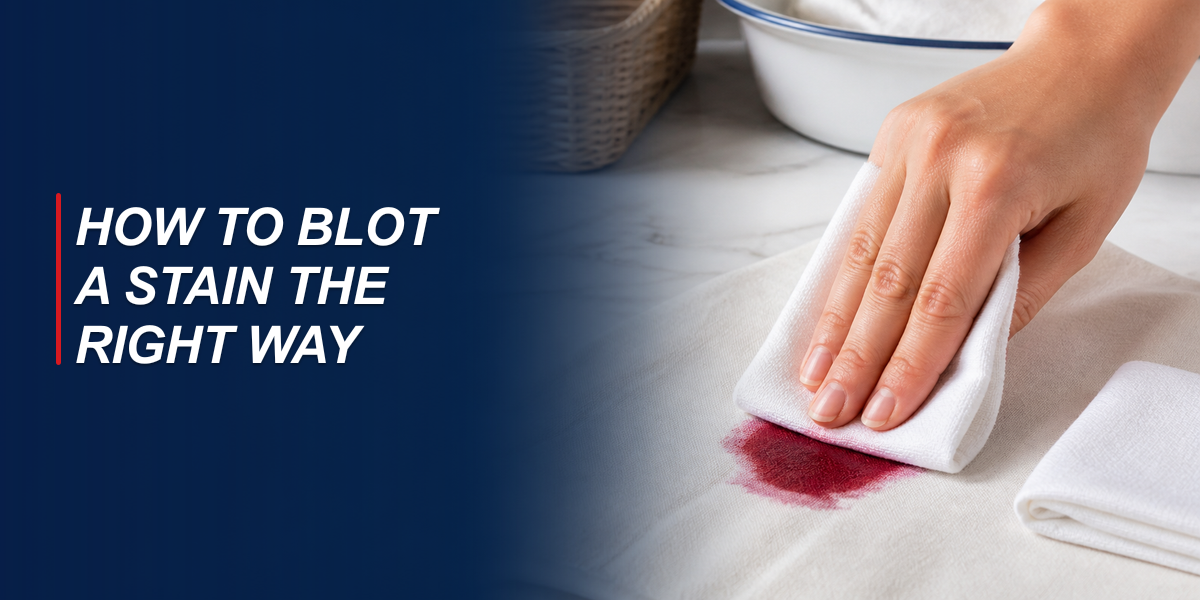
Knowing how to blot a stain comes down to one simple move: press a clean cloth gently onto the spill to absorb it — you never rub. That's it. But if you've ever stood over a spilled coffee cup wondering whether "blot" means dab, scrub, or something else entirely, you're not alone. Stain removal instructions throw the word around constantly without ever explaining it, so let's clear it up.
What Does It Mean to Blot a Stain?
Blotting is a pressing-and-lifting motion. You lay a clean, absorbent cloth or paper towel over the stain and press straight down, then lift it away. The cloth soaks up the liquid sitting on top of the fabric before it has a chance to soak in further.
Think of it like using a paper towel to soak up a puddle on the counter versus wiping it in a circle. Pressing down pulls the liquid up and out. Wiping just spreads it around and pushes it into whatever surface you're working on — which, in the case of clothing, means deeper into the fibers.
That's really what blotting is all about: absorption instead of agitation. You're giving the liquid somewhere to go (the cloth) instead of grinding it further into the weave of your shirt, tablecloth, or upholstery.
Blotting vs. Rubbing: Why It Matters
Rubbing feels productive. It feels like you're "working" the stain out. In reality, rubbing usually makes things worse for three reasons:
- It spreads the stain. Instead of staying contained in one spot, the liquid smears outward across a wider area of fabric.
- It pushes the stain deeper. Friction forces the liquid down into the fibers instead of lifting it toward the surface, which makes the stain harder to fully remove later.
- It damages the fabric. Aggressive rubbing can fray fibers, pill the surface, or wear down delicate fabrics like silk, wool, or performance athletic wear — sometimes leaving a rough patch even after the stain is gone.
Blotting clothes instead of scrubbing them keeps the stain contained and gives you a much better shot at getting it out completely once you treat it.
How to Blot a Stain Step by Step
Here's how to blot correctly, whether you're dealing with wine on a shirt or sauce on a napkin:
- Act fast. The sooner you blot, the less time the liquid has to set into the fabric.
- Grab a clean, white cloth or paper towel. White is best because it won't transfer dye onto the stain, and a clean cloth won't reintroduce dirt or oils.
- Scrape off any excess first. If it's something solid — like ketchup, a bit of food, or mud — gently scrape it away with a spoon or dull knife before you start blotting.
- Work from the outside edges in. Starting at the outer edge of the stain and pressing toward the center helps keep it from spreading further outward.
- Press, don't scrub. Firmly press the cloth onto the stain and hold for a second or two, then lift straight up. Repeat.
- Switch to a clean section often. As soon as the cloth picks up color or liquid, move to a fresh, clean spot on the cloth (or grab a new one). Reusing a saturated section just presses the stain back into the fabric.
- Follow up with proper treatment. Blotting removes the excess liquid, but it's rarely the whole fix. Follow with a stain-specific pretreatment or detergent before washing as usual.
What to Blot With — and When NOT to Blot
For most fresh spills, plain white paper towels or a clean white cotton cloth work fine. For delicate fabrics, a soft microfiber cloth is gentler. Cold water can help dilute and lift many fresh stains as you blot; avoid hot water on protein-based stains like blood or egg, since heat can cook the stain in.
Blotting is a fresh-stain technique. If a stain has already dried or set — meaning it's been through the dryer, ironed, or just sat for days — blotting alone won't do much because there's no more liquid sitting on the surface to absorb. At that point, you're better off soaking the garment and using a targeted stain treatment. For those tougher cases, see our guide on how to remove set-in stains.
FAQ: Blotting Stains
What does it mean to blot a stain? It means pressing a clean, absorbent cloth against a spill to soak up the liquid, rather than rubbing or scrubbing it into the fabric.
What is blotting compared to normal wiping? Wiping tends to involve side-to-side or circular motion, which spreads a stain. Blotting is a straight-down press-and-lift motion that pulls liquid up and out instead of smearing it.
How do I blot a stain if I don't have a white cloth handy? Any clean, colorfast, absorbent cloth or paper towel will work in a pinch — just avoid anything patterned or dyed that could transfer color onto the stain.
When Blotting Isn't Enough
Sometimes even perfect blotting and pretreatment can't fully beat a stubborn stain — especially with kids' sports uniforms, work clothes, or that one shirt you swear is cursed. When that happens, bring it to The Great American Laundromat. Our wash & fold service uses professional-grade detergents and stain treatment know-how that go beyond what most home laundry rooms can manage, so you can drop it off and let us handle the rest.